This article is not just for women trying to conceive. This article is for every mother. Every father. Every parent raising a child today.
Because in my years of working with women and couples on their fertility journeys, I have seen something that breaks my heart repeatedly — and it does not begin when a woman is trying to conceive. It begins in childhood. In adolescence. In the years when parents had the opportunity to pay attention — and did not.
Not because they did not love their children. But because nobody told them what to look for. Because the culture of silence around reproductive health runs so deep that even the most devoted parents never think to look at their daughter’s period, their son’s health, or the infections that pass through young bodies quietly — leaving damage that only shows up years later when a grown woman sits in front of me, tears in her eyes, asking why she cannot conceive.
This article is the conversation your parents never had with you — and the one you need to have with your children.
The Girl Child — What Parents Are Missing
Her First Period Is Not Just a Milestone. It Is a Health Report.
When a girl gets her first period, most families mark it with a quiet conversation, a sanitary pad, and the instruction to manage it privately. Very few families sit down and ask the important questions. Is the pain manageable or severe? Is the flow light, normal, or extremely heavy? Is her cycle arriving regularly or erratically? Is she passing clots? Is she so debilitated that she misses school?
These questions matter. Because the answers are the first chapter of her reproductive health story.
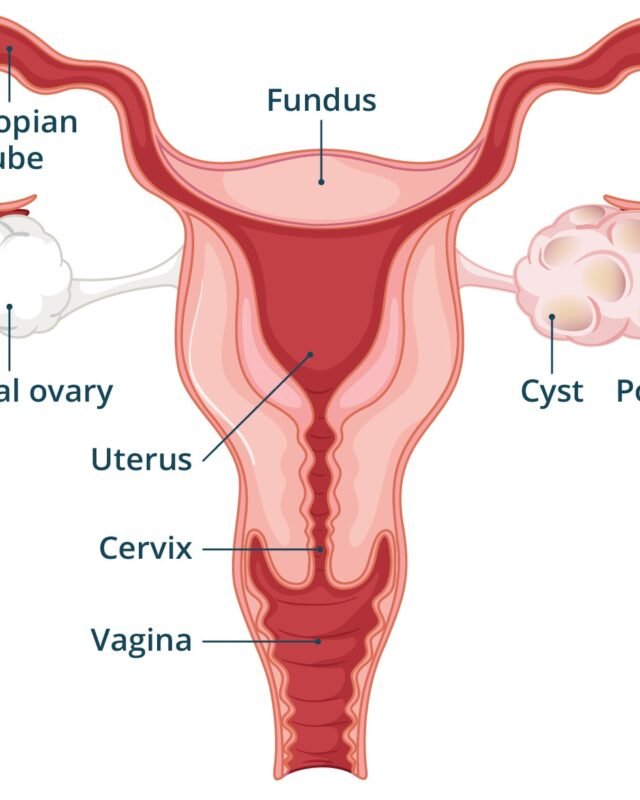
A girl who has severe, debilitating period pain from her very first cycle may have endometriosis beginning to establish itself. A girl whose periods are extremely heavy with dark, clotted blood from the start may have fibroids developing or adenomyosis. A girl whose cycle is wildly irregular from the beginning may have PCOS.
These are not adult conditions that appear suddenly in a woman’s thirties. They are conditions that begin early — sometimes in adolescence — and progress quietly, year after year, while everyone around the young woman tells her that painful periods are normal and something every woman goes through. They are not.
And the girl who is told to endure at fourteen is often the woman sitting in my consultation at thirty-two, having tried to conceive for three years, finally discovering a condition that has been present since she was a teenager.
Infections in the Girl Child — The Silent Damage
This is the part that parents find most difficult to discuss. But it must be said.
Young girls and teenage girls can develop reproductive tract infections from various sources — not all of them related to sexual activity. Urinary tract infections that travel upward. Vaginal infections from hygiene practices. Infections from contaminated water or environments.
When these infections are noticed and treated promptly, the damage is minimal. When they are ignored — because the mother is embarrassed to address it, because the girl is too afraid to speak up — they can travel upward into the uterus and fallopian tubes.
A pelvic infection that goes untreated in a fifteen year old girl can scar her fallopian tubes silently. She will not know. She will feel fine. She will grow up, get married, try to conceive — and discover blocked tubes at thirty. The infection that caused the blockage happened fifteen years earlier. It was left untreated. And now she is here.
Pay attention to your daughter’s health. Do not be embarrassed to take her to a doctor when something is wrong below the waist. The embarrassment lasts a moment. The consequences of ignoring it can last a lifetime.
Signs in Your Daughter That Deserve Attention
- Severe period pain that prevents her from going to school or carrying out normal activities
- Very heavy periods — soaking through multiple pads in a short time, passing large clots
- Periods that are extremely irregular from the beginning — not just in the first year or two of menstruation
- Unusual vaginal discharge — particularly if it has an odour, an unusual colour, or causes itching or discomfort
- Persistent lower abdominal pain outside of her period
- Fatigue and anaemia that seems linked to her cycle
- Excessive hair growth on the face or body alongside irregular periods
None of these should be dismissed. All of them deserve medical assessment. Your daughter deserves to be taken seriously.
The Boy Child — What Parents Are Missing
This conversation is even more absent than the one about daughters. Because in most African households, the reproductive health of male children is simply not discussed.
Boys are taught about hygiene. They are not taught about their fertility. And yet — the fertility challenges that male children carry silently into adulthood are just as real, just as impactful, and just as preventable as those of female children.
Infections in the Boy Child — Equally Damaging
Sexually transmitted infections in young men frequently have no symptoms. A young man can carry chlamydia, gonorrhoea, or other infections for months or years without any pain, any discharge, or any sign that anything is wrong.
Meanwhile, those infections are quietly damaging the reproductive structures — the epididymis, the vas deferens, the seminal vesicles — that sperm travel through from production to ejaculation.
The result, years later, is obstructive azoospermia — a blockage in the male reproductive tract that prevents sperm from being present in the ejaculate at all. Or severely damaged sperm that cannot fertilise an egg. A young man who received prompt treatment for an infection at nineteen may have no lasting impact. A young man whose infection went unnoticed and untreated may be sitting in a fertility clinic at thirty-five wondering why there are no sperm in his sample.
Varicocele — The Condition Nobody Talks About
A varicocele is an enlargement of the veins within the scrotum — similar to varicose veins in the legs. It is one of the most common and most correctable causes of male infertility.
Varicoceles are often present from adolescence. They can cause a dull ache or heaviness in the testicular area — but many young men have no symptoms at all and simply do not know. Left unaddressed, varicoceles raise the temperature of the testes and impair sperm production over time.
A simple physical examination by a doctor can identify a varicocele. This is not a complex or invasive assessment. But it requires someone to think to look — and currently, almost nobody does.
Signs in Your Son That Deserve Attention
- A persistent dull ache or heaviness in the testicular area
- Any unusual swelling or lumps in the scrotal area
- Signs of a sexually transmitted infection — unusual discharge, pain during urination — even if he dismisses it as minor
- Any known infection that was treated incompletely or not followed up
What Parents Can Do
Talk to your children about their bodies. This means age-appropriate, ongoing conversations that normalise the idea of reproductive health as part of overall health — not something shameful to be hidden.
Take their symptoms seriously. When your daughter says her periods are painful, do not tell her it is normal and she will get used to it. When your son mentions discomfort in a private area, do not dismiss it. Take them to a doctor. Ask specific questions. Push for proper assessment.
Treat infections promptly and completely. Any infection in the reproductive area — in a child or adolescent of any gender — deserves prompt, complete treatment and follow-up to confirm it has fully resolved.
Do not let embarrassment cost your child their future fertility. The discomfort of these conversations is temporary. The consequences of avoiding them can be permanent.
Consider pre-marital fertility assessment for your adult children. As I have written in Why Every Couple Should Test Their Fertility Before the Wedding, knowing your fertility status before marriage is one of the wisest investments a couple can make.
Endometriosis Is Real. Fibroids Are Real. Male Infertility Is Real.
These are not conditions that appear from nowhere in adulthood. They have histories. They have origins. They develop over years — often beginning in the bodies of children and adolescents who were never taught to recognise the signs, and whose parents were never told to look.
The fertility crisis that a woman or couple faces at thirty is often the consequence of seeds planted — and ignored — in their teenage years.
You have the power, as a parent, to change that story for your children. Not by creating fear. Not by treating their bodies as problems. But by paying attention. By taking their health seriously. By normalising the conversation about reproductive health as simply part of caring for a whole, healthy person.
A Final Word to Parents
You brought your children into this world. You protected them through childhood. You guided them through adolescence. Do not stop now.
The care you give to their reproductive health today — the attention you pay to the signs, the infections you treat promptly, the periods you take seriously, the conversations you have — may be the reason your grandchildren exist.
Pay attention. It matters more than you know.
Related Reading
At Ohemaa Fertile Home, we provide guided herbal fertility support rooted in three generations of traditional knowledge. We serve women across Ghana, Nigeria, and the diaspora. Reach out to us on WhatsApp for a free, confidential consultation.