After years of working with women on their fertility journeys, one pattern keeps appearing — and it breaks my heart every single time.
A woman comes to me. She has been trying to conceive for three, four, sometimes seven years. She is exhausted. She is discouraged. She has begun to believe that something is fundamentally wrong with her — that perhaps she was not meant to be a mother.
I ask her: “What tests have you done?” She says: “I did a scan. They said everything looks fine.”
And there it is. The single most common reason women spend years going in circles. A scan is not a fertility assessment. It is one piece of a much larger picture.
The Problem With “The Scan Was Normal”
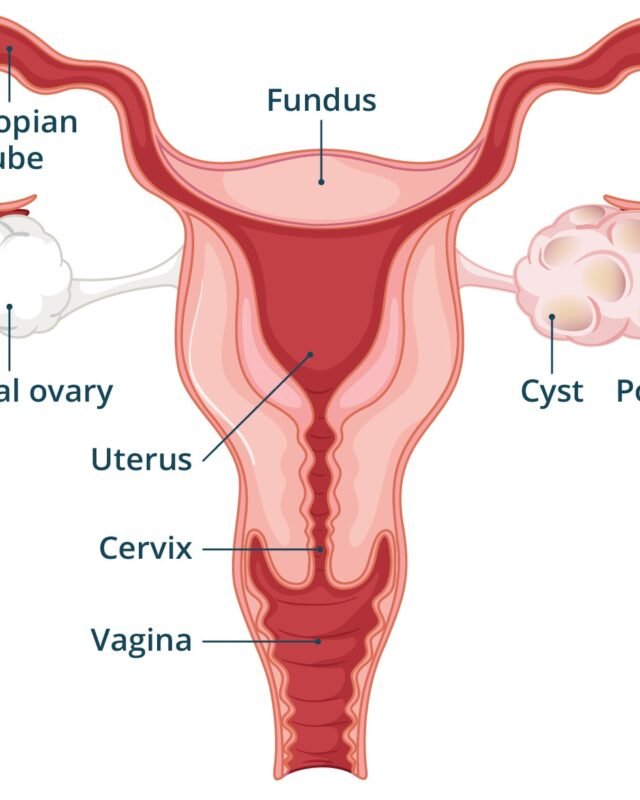
A pelvic or abdominal ultrasound scan is a useful starting point. It can show the size and shape of the uterus, identify visible fibroids, large cysts, or obvious structural abnormalities. But here is what a scan cannot tell you:
- Whether your hormones are balanced
- Whether your fallopian tubes are open or blocked
- Whether you are ovulating consistently
- Whether your egg reserve is sufficient for your age
- Whether your husband or partner’s sperm is healthy, motile, and present in adequate numbers
A woman can have a perfectly normal-looking scan and still have blocked tubes. She can have a normal scan and still have a hormonal imbalance preventing ovulation. She can have a normal scan and still have a husband whose sperm count is too low to achieve natural conception.
If these questions have not been answered, you do not yet have enough information to understand why conception has not occurred.
The Tests That Actually Tell Your Story
Over the years, working with hundreds of women across Ghana, Nigeria, and beyond, I have seen what happens when a woman finally gets a complete picture of her reproductive health. For many of them, it is the first time in years that someone has sat down with them and said: this is what is happening in your body, and this is what needs to be addressed. Here are the key assessments that every woman trying to conceive should have:
1. Hormonal Profile — The Foundation of Everything
Your hormones regulate your entire reproductive cycle. Without the right hormonal environment, ovulation cannot occur consistently — and without ovulation, conception cannot happen. Key hormones to test include:
- FSH (Follicle Stimulating Hormone) — tells you how hard your body is working to produce eggs. Elevated FSH can indicate diminished ovarian reserve.
- LH (Luteinising Hormone) — triggers ovulation. Imbalanced LH is a hallmark of PCOS.
- Oestrogen (Oestradiol) — essential for egg development and uterine lining preparation.
- Progesterone — supports the second half of the cycle and is critical for implantation. Low progesterone is one of the most common and most overlooked causes of early pregnancy loss.
- Prolactin — elevated prolactin can suppress ovulation entirely, even in women with regular-appearing cycles.
- Thyroid hormones (TSH, T3, T4) — thyroid dysfunction is a leading and frequently missed cause of fertility problems in African women.
- AMH (Anti-Müllerian Hormone) — gives a direct indication of your ovarian reserve. One of the most important tests for any woman over 30 trying to conceive.
2. HSG — Are Your Tubes Open?
A Hysterosalpingogram (HSG) is an X-ray procedure that checks whether your fallopian tubes are open and your uterine cavity is normal. If your tubes are blocked — even partially — sperm cannot reach the egg. Conception becomes impossible without addressing the blockage first, regardless of how much you try.
Many women have been trying to conceive for years with blocked tubes and had no idea — because a scan will not show a blockage. Only an HSG or similar procedure will. This test alone has been the turning point for countless women in our care.
3. Sperm Analysis — The Other Half of the Equation
This is perhaps the most overlooked aspect of fertility assessment in African households — and it is one of the most important. Infertility is not a woman’s problem alone. In approximately 40 to 50 percent of couples experiencing difficulty conceiving, male factor infertility is a contributing cause. A semen analysis assesses:
- Sperm count — how many sperm are present
- Motility — how well the sperm move
- Morphology — the shape and structure of the sperm
- Volume and pH — the quality of the seminal fluid
A man can appear completely healthy, have no symptoms, and still have a sperm count or motility issue that is preventing conception. Without this test, half of the picture remains invisible. If your husband or partner has not yet had a semen analysis, this must be done before any further steps are taken.
4. Pelvic Ultrasound — But Done Properly
A scan is still valuable — but it must be done thoroughly and by someone who knows what to look for. A proper pelvic ultrasound should assess:
- The uterus — size, shape, presence of fibroids or adenomyosis
- The ovaries — presence of cysts, follicle count, signs of PCOS
- The uterine lining — thickness and quality at the right point in the cycle
- Any free fluid or signs of infection
Ask specifically for a transvaginal ultrasound where appropriate, as it provides a much clearer view than an abdominal scan alone.
5. Additional Tests Based on Your Specific History
Depending on your personal history, a thorough practitioner may also recommend:
- Autoimmune and clotting tests — for women with recurrent miscarriage
- Infectious disease screening — some infections silently damage the reproductive tract
- Insulin resistance testing — closely linked to PCOS and hormonal imbalance
- Vitamin D and iron levels — deficiencies that are extremely common in African women and directly impact fertility
Moving From Darkness Into Clarity
The reason so many women spend years in the same cycle — trying, hoping, failing, trying again — is not because conception is impossible for them. It is because they are navigating without a map. Every woman deserves to know:
- What is happening in her body
- What is working and what is not
- What specific obstacles stand between her and conception
- And what needs to be done — step by step — to address those obstacles
This knowledge is not a luxury. It is a right. And it is the foundation of every successful fertility journey we have supported at Ohemaa Fertile Home.
What To Do Starting Today
If you have been trying to conceive for more than six months — or more than twelve months if you are over 35 — take these steps now:
- Book a full hormonal profile with your doctor or a reproductive health specialist. Do not accept a scan alone as a complete assessment.
- Ask specifically for an HSG to check whether your tubes are open.
- Ask your husband or partner to have a semen analysis done. This conversation may feel difficult — but it is essential.
- Bring your results to a practitioner who can interpret them holistically and guide you on the next steps — whether medical, herbal, nutritional, or a combination.
- Reach out to us. At Ohemaa Fertile Home, we review your results with you, identify the gaps, and create a personalised herbal support programme built around your specific diagnosis.
You Are Not Moving Alone Anymore
You were never unintelligent. You were never faithless. You were never weak. You were simply moving without the information you needed.
Now you have it. And now you can move differently. Stop fighting in the dark. Get the full picture. Take the right steps. And let us walk with you.
At Ohemaa Fertile Home, we provide structured herbal fertility support rooted in three generations of traditional knowledge and guided reproductive wellness care. We support women across Ghana, Nigeria, and the diaspora with personalised consultations designed around their unique fertility journey. Reach out to us on WhatsApp if you need help.