Most women have never heard the word. But many of them are living with the condition.
You know her. Maybe you are her. She bleeds heavily every month — going through pads at a rate that embarrasses her. She passes clots. Her periods last seven, eight, sometimes ten days. She is exhausted for almost half the month. She has lower back pain that radiates down her legs. Sex is sometimes painful. She has been told her scan is normal.
She has been told it is stress. She has been told it is her diet. She has been told some women just bleed more.
What she has not been told is that she may have adenomyosis — and that it may be the reason she has not been able to conceive.
What Is Adenomyosis?
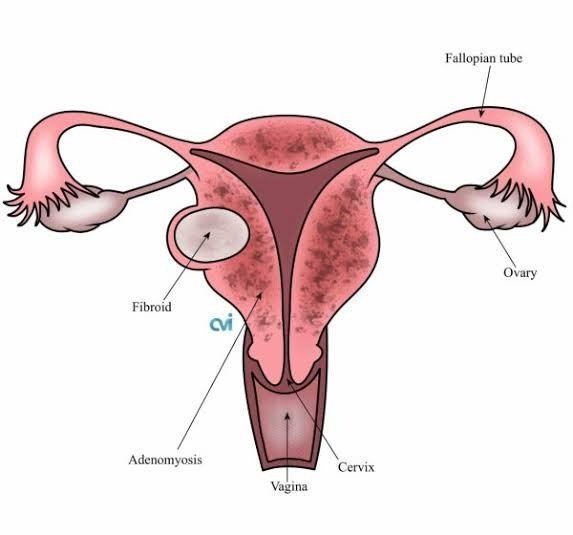
Adenomyosis is a condition in which the tissue that normally lines the inside of the uterus — the endometrium — grows into the muscular wall of the uterus itself.
In a healthy uterus, the lining grows and sheds with each cycle. In adenomyosis, this tissue is embedded within the uterine muscle. It still responds to hormonal changes — growing and bleeding with each cycle — but the blood has nowhere to go. It becomes trapped within the muscle wall, causing the uterus to become enlarged, inflamed, and painful.
Unlike fibroids, which are distinct growths that can often be seen clearly on a scan, adenomyosis is diffuse — spread throughout the muscle. This makes it much harder to diagnose by ultrasound alone, and it is why so many women with adenomyosis are told their scan looks normal.
A definitive diagnosis traditionally requires an MRI or surgical examination. However, an experienced practitioner who knows what to look for can often identify the signs through a careful history and a thorough ultrasound.
Why It Is So Underdiagnosed in African Women
Adenomyosis is significantly underdiagnosed — not just in Africa, but globally. However, in African communities, several factors make it even less likely to be identified:
Heavy periods are normalised. African women are frequently told that painful, heavy periods are simply part of womanhood. Many women with adenomyosis have been suffering for years — sometimes decades — before anyone takes their symptoms seriously.
Awareness is low. Many healthcare providers, particularly in settings where specialist reproductive health services are limited, are not consistently testing for adenomyosis when a woman presents with heavy periods and pelvic pain.
The diagnostic tools are not always accessible. MRI, which provides the clearest adenomyosis diagnosis, is expensive and not always available in all locations.
The result is a generation of women whose condition has been quietly progressing for years — while they were told everything is normal.
The Symptoms You Should Know
Adenomyosis presents differently in every woman, but the most common signs include:
- Heavy menstrual bleeding — often requiring frequent pad changes and passing large clots
- Prolonged periods — lasting longer than seven days
- Severe cramping that begins before the period and continues throughout
- Chronic pelvic pain — not just during menstruation
- A feeling of pressure or heaviness in the lower abdomen
- Bloating and an enlarged, tender uterus
- Pain during sexual intercourse
- Lower back pain during menstruation
- Fatigue and anaemia from blood loss
- Difficulty conceiving or recurrent pregnancy loss
Not every woman with adenomyosis will have all of these symptoms. Some women have very heavy bleeding with minimal pain. Others have severe pain with less obvious bleeding. And a small number have no symptoms at all — only discovering the condition when investigating fertility challenges.
How Adenomyosis Affects Fertility
Adenomyosis can impact fertility in several important ways:
The uterine environment is disrupted. When the muscle of the uterus is inflamed and structurally altered, it affects the uterine lining — the very place an embryo needs to implant and grow. An inflamed, compromised lining is less receptive to implantation.
Uterine contractions are affected. The uterus contracts in specific ways to support the movement of sperm toward the egg and to support implantation. In adenomyosis, these contractions are often irregular or excessive — working against rather than supporting conception.
Blood flow to the uterus is altered. Healthy implantation requires good blood supply to the uterine lining. The structural changes caused by adenomyosis can compromise this.
Inflammation creates a hostile environment. Chronic inflammation — which is central to adenomyosis — has a direct negative effect on egg quality, sperm function, implantation, and early pregnancy maintenance.
This is why women with undiagnosed and untreated adenomyosis often experience recurrent implantation failure or early miscarriage — even when everything else appears to be in order.
You Cannot Treat What You Have Not Named
This is the single most important message of this article.
Many women are on fertility journeys — taking treatments, doing procedures, trying month after month — without ever having been told that adenomyosis may be the underlying issue. They are treating the surface while the root cause continues unchecked.
The first step is always identification. If you have heavy periods, severe cramping, and have been struggling to conceive — please ask specifically about adenomyosis. Ask for a thorough transvaginal ultrasound with a practitioner who specifically examines for adenomyosis features. Ask whether an MRI may be appropriate for your situation.
Do not accept a normal scan result as a complete answer if your symptoms tell a different story.
What Can Be Done
Adenomyosis is a chronic condition — but it can be managed, and its impact on fertility can be significantly reduced with the right approach.
Reducing inflammation is central to any adenomyosis management strategy. Anti-inflammatory nutrition — reducing processed foods, refined sugars, and inflammatory oils while increasing omega-3 rich foods, leafy greens, and antioxidants — has a direct impact on the severity of the condition.
Hormonal support can help regulate the cycle, reduce excessive bleeding, and create a more stable hormonal environment that reduces adenomyosis activity.
Herbal support plays a powerful role in addressing the inflammation, pain, and hormonal disruption associated with adenomyosis. At Ohemaa Fertile Home, we have worked with many women with adenomyosis diagnoses — supporting their womb environment, reducing inflammation, and preparing their bodies for conception.
Specialist medical care may also be necessary depending on the severity of the condition. We always encourage women to work alongside qualified medical professionals while receiving holistic support.
Your Uterus Is Not Your Enemy
Adenomyosis can make you feel like your own body is working against you. The pain, the heaviness, the exhaustion — it can feel relentless. But your uterus is not broken. It is inflamed. It is struggling. And it is asking for support.
With the right diagnosis and the right care, many women with adenomyosis go on to have successful pregnancies. The key is knowing what you are dealing with — and taking action before more time passes.
Start the Conversation Today
If you recognise your story in this article — if you have been living with heavy, painful periods and struggling to conceive — please do not wait any longer.
Come to us with your history. Bring whatever tests you have. We will help you understand what they mean, identify what may still be missing, and create a support programme that addresses your specific situation. You have been suffering quietly for long enough. It is time to be heard.
At Ohemaa Fertile Home, we provide structured herbal fertility support rooted in three generations of traditional knowledge and guided reproductive wellness care. We support women across Ghana, Nigeria, and the diaspora with personalised consultations designed around their unique fertility journey. Reach out to us on WhatsApp if you need help.