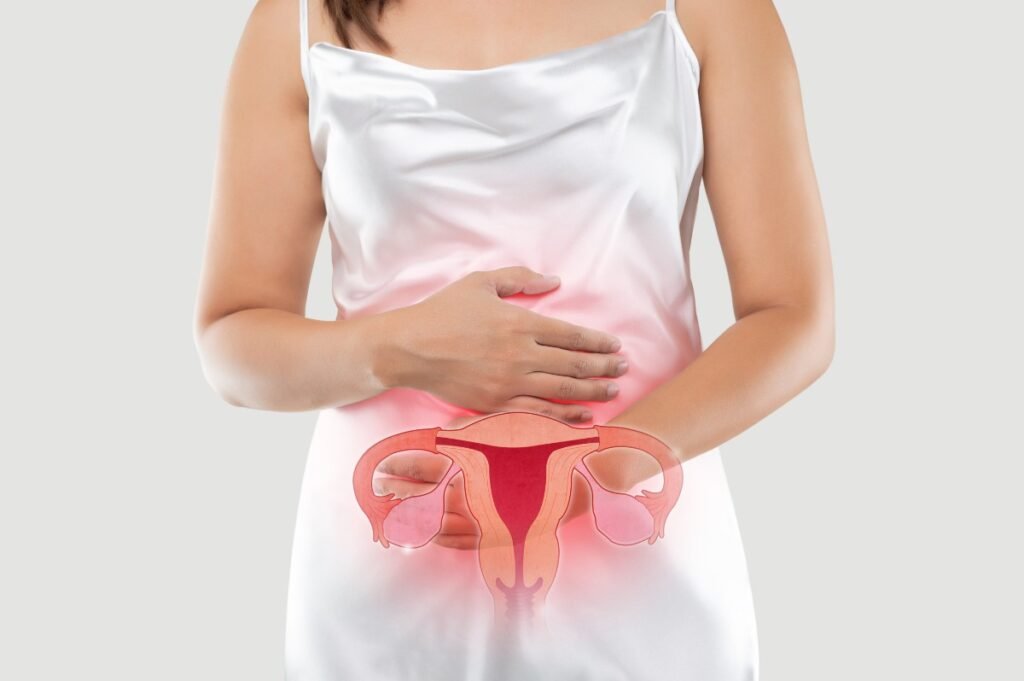
She has been in pain for years. Not the mild discomfort that comes and goes. Real pain. The kind that doubles her over. The kind that makes her cancel plans, miss work, and lie on the floor with a hot water bottle pressed against her abdomen wondering why her body feels like it is at war with itself.
She has been to doctors. She has been told it is normal. She has been given painkillers. She has been put on the pill. She has been told to lose weight, reduce stress, try yoga.
What she has not been told — what nobody has sat down and explained to her — is that she may have endometriosis. And that endometriosis may be the reason she is struggling to conceive.
This article is for her. And it may be for you.
What Is Endometriosis?
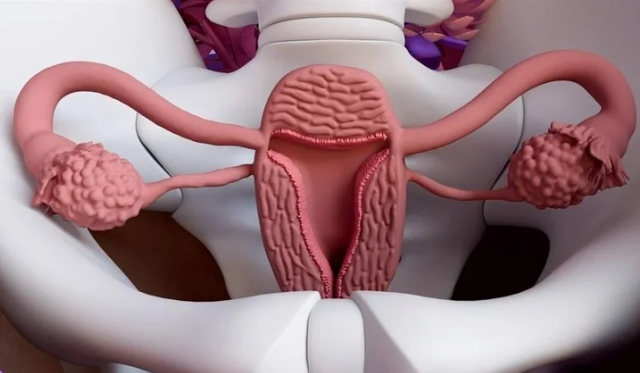
Endometriosis is a condition in which tissue similar to the lining of the uterus — the endometrium — grows outside the uterus in places it should not be.
This tissue can grow on the ovaries, the fallopian tubes, the bladder, the bowel, the pelvic lining, and in severe cases, even further afield. Like the uterine lining, this tissue responds to the hormonal changes of the menstrual cycle — growing, breaking down, and bleeding each month.
But unlike the uterine lining, this blood has nowhere to go. It becomes trapped. It causes inflammation, scarring, and the formation of adhesions — bands of fibrous tissue that can bind organs together and distort the normal anatomy of the pelvis.
Over time, this process causes cumulative damage — to the ovaries, the tubes, the uterine environment, and the reproductive system as a whole.
The Diagnosis Problem
Endometriosis affects an estimated 1 in 10 women of reproductive age. Yet the average time between a woman first experiencing symptoms and receiving a correct diagnosis is between 7 and 10 years.
Seven to ten years.
In that time, the condition continues to progress. Damage accumulates. Fertility is affected. And the woman is repeatedly told that what she is experiencing is normal.
This is not a small failure. It is a systemic one. And it falls most heavily on African women, who are even less likely to receive timely investigation and diagnosis than women in other parts of the world.
The reasons are familiar — period pain is normalised, awareness is low, specialist services are limited, and women are too often dismissed when they present with pain.
The Symptoms You Should Not Ignore
Endometriosis can present in many ways, and not every woman experiences all of these symptoms. But if several of these resonate with you, please seek a thorough investigation:
- Severe menstrual pain — significantly worse than typical period cramps, often beginning before the period starts
- Chronic pelvic pain — pain that is present throughout the month, not only during menstruation
- Pain during or after sexual intercourse — particularly deep penetrative pain
- Painful bowel movements or urination — especially during menstruation
- Heavy menstrual bleeding — with or without large clots
- Bleeding between periods
- Bloating — sometimes referred to as “endo belly” — significant abdominal bloating particularly around menstruation
- Fatigue — deep, persistent exhaustion that is disproportionate to your activity level
- Difficulty conceiving — in some women, infertility is the first and only obvious sign of endometriosis
It is also important to note that some women with significant endometriosis have minimal or no symptoms. The absence of severe pain does not mean the condition is absent.
How Endometriosis Affects Fertility
Endometriosis is one of the leading causes of female infertility. It is estimated to be present in 25 to 50 percent of women who are struggling to conceive. It affects fertility through several mechanisms:
Damage to the ovaries. Endometriomas — cysts filled with old blood, sometimes called chocolate cysts — form on the ovaries. They damage ovarian tissue, reduce egg reserve, and compromise egg quality. A woman with endometriomas on her ovaries may have significantly fewer eggs available than a woman of the same age without the condition.
Blockage or distortion of the fallopian tubes. Adhesions and scar tissue caused by endometriosis can block the tubes or pull them out of their natural position — preventing eggs from travelling to the uterus and sperm from reaching the egg.
A hostile pelvic environment. The inflammatory chemicals produced by endometriosis tissue create a toxic environment in the pelvis that affects egg quality, sperm function, and the early stages of embryo development.
Compromised uterine receptivity. Even when fertilisation occurs, implantation can be affected. The inflammatory environment of endometriosis impacts the uterine lining — making it less receptive to an embryo.
Hormonal disruption. Endometriosis is closely linked to oestrogen dominance — a state in which oestrogen levels are relatively high and progesterone relatively low. This hormonal imbalance disrupts ovulation and creates conditions that are unfavourable for conception.
Why It Is Often Missed
The gold standard for diagnosing endometriosis is laparoscopy — a surgical procedure in which a camera is inserted into the abdomen to look directly at the pelvic organs. Endometriosis cannot be definitively diagnosed without this procedure or advanced imaging.
A standard ultrasound scan will not show most forms of endometriosis. It can identify endometriomas on the ovaries, but it cannot see the adhesions, the peritoneal deposits, or the deep infiltrating endometriosis that may be causing the most damage.
This is why so many women are told their scan is normal — and continue to suffer for years without a diagnosis.
If you have the symptoms described in this article, a normal scan is not enough. You need a specialist assessment by a practitioner who specifically investigates for endometriosis.
What Can Be Done
Endometriosis is a chronic condition — but it can be managed, and its impact on fertility can be significantly reduced with the right approach.
Reduce inflammation. Endometriosis is fundamentally an inflammatory condition. An anti-inflammatory approach — removing processed foods, refined sugars, and inflammatory oils from the diet while increasing omega-3 rich foods, leafy greens, and antioxidants — directly addresses the inflammatory environment that drives the condition.
Support hormonal balance. Oestrogen dominance feeds endometriosis. Supporting the liver’s ability to metabolise and clear excess oestrogen — through nutrition, targeted supplements, and herbal support — helps reduce the hormonal environment that sustains the condition.
Herbal support. At Ohemaa Fertile Home, we have worked with many women with endometriosis diagnoses. Our protocols are designed to reduce inflammation, support hormonal balance, improve uterine receptivity, and prepare the body for conception. Herbal support does not replace medical care — but it can meaningfully complement it and improve outcomes.
Medical intervention when necessary. In cases where endometriomas are large, tubes are significantly blocked, or the condition is severe, surgical intervention may be necessary. We always encourage women to work alongside qualified medical professionals and to make fully informed decisions about their care.
Protect your egg reserve. If you have endometriomas on your ovaries, time matters. The longer they are left, the more ovarian tissue they damage. Seek specialist advice about whether and when intervention is appropriate — and in the meantime, support your ovarian health nutritionally and hormonally.
A Word on Living With Endometriosis
Beyond fertility, endometriosis affects quality of life in ways that are rarely acknowledged. The chronic pain. The unpredictable symptoms. The cancelled plans and the relationships strained by invisible suffering. The exhaustion of a condition that nobody can see and that many people still do not take seriously.
If you are living with endometriosis — diagnosed or suspected — your pain is real. Your exhaustion is real. And you deserve more than being told to manage it with painkillers and patience.
You deserve to be believed. You deserve a proper investigation. You deserve a treatment plan that actually addresses what is happening in your body.
Do Not Wait
Endometriosis is a progressive condition. It does not stay the same. Left unaddressed, it continues to cause damage — to the ovaries, the tubes, the uterine environment, and the overall reproductive potential.
The earlier it is identified and addressed, the better the outcomes — for pain, for quality of life, and for fertility.
If you have been living with symptoms you have been told to accept — please do not accept them any longer. Ask for a thorough investigation. Find a practitioner who takes you seriously. And reach out to us.
At Ohemaa Fertile Home, we provide structured herbal fertility support rooted in three generations of traditional knowledge and guided reproductive wellness care. We support women across Ghana, Nigeria, and the diaspora with personalised consultations designed around their unique fertility journey. Reach out to us on WhatsApp if you need help.