The word “cyst” frightens people. It should not — at least not automatically.
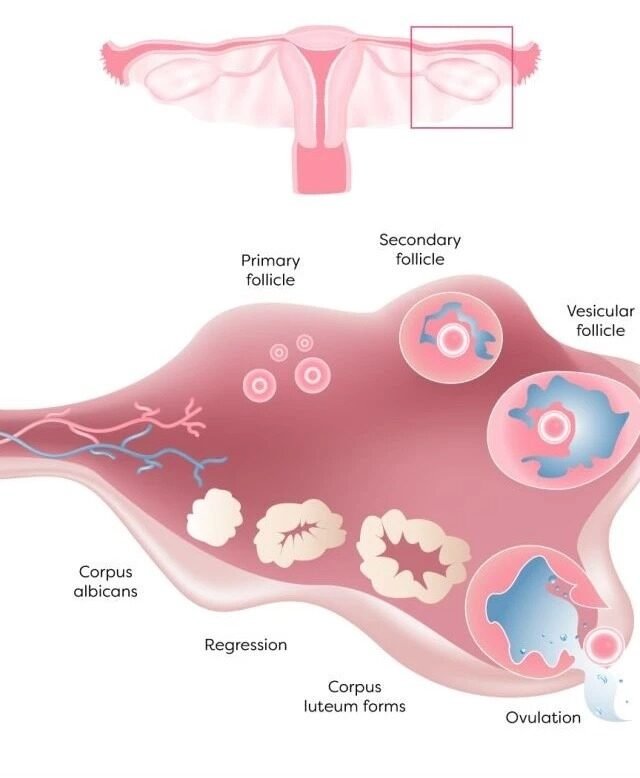
Here is something most women are never told: a healthy, ovulating woman grows a cyst every single month. The follicle that carries your egg is, technically, a fluid-filled sac. After it releases the egg it becomes a corpus luteum — another fluid-filled structure. A scan taken at the wrong point in your cycle will show one of these, and someone can call it a cyst.
Functional Cysts — The Common, Harmless Kind
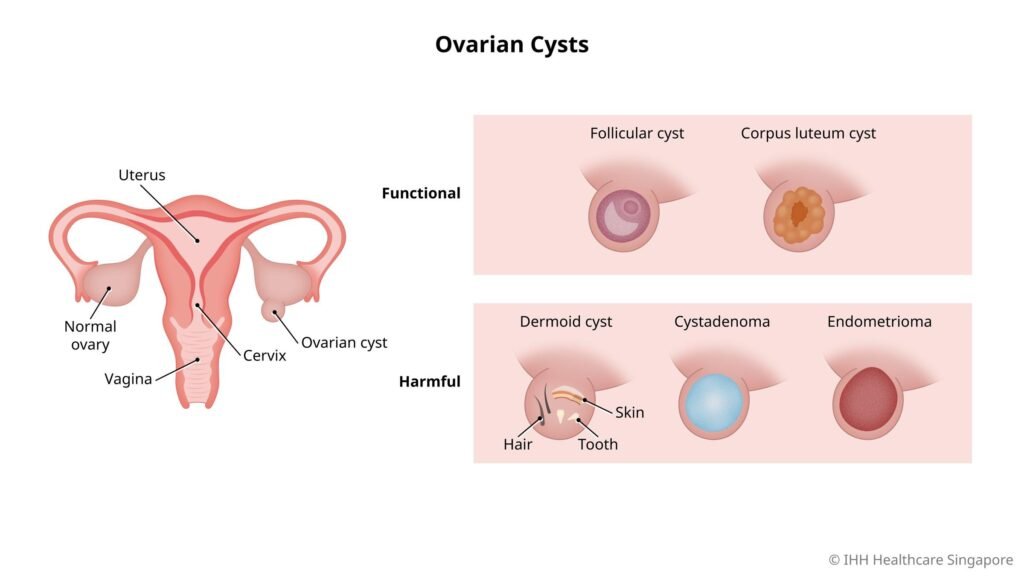
These are the cysts of ordinary ovulation. They form, they do their job, and they resolve within one or two cycles without any treatment at all. The NHS notes that most ovarian cysts are harmless and disappear on their own.
This is why a repeat scan matters so much. A cyst seen once means very little. A cyst still present after two or three cycles means something worth investigating. If your only scan was taken mid-cycle and no repeat was arranged, ask for one before you accept a diagnosis or agree to any surgical plan.
The Cysts That Do Deserve Attention
- Endometriomas (“chocolate cysts”) — cysts filled with old blood, caused by endometriosis. They are associated with inflammation, pelvic pain, and reduced ovarian function. These matter for fertility.
- Dermoid cysts — slow-growing, and able to twist the ovary. Usually removed surgically.
- Cystadenomas — can grow large and cause pressure, pain, or ovarian torsion.
- Persistent complex cysts — any cyst with solid components or unusual features needs proper specialist assessment. Not reassurance, and not panic.
And Then There Is PCOS — Which Is Not Really “Cysts” At All
Polycystic ovary syndrome is the most misnamed condition in women’s health. Those “cysts” on the scan are not cysts — they are many small, immature follicles that began to develop and stalled because ovulation is not completing. PCOS is a hormonal and metabolic condition, not a cyst condition, and treating it as one sends women down entirely the wrong path. We unpack it fully in What Nobody Tells You About PCOS.
Warning Signs That Need Care Now
Go to hospital without delay if you experience:
- Sudden, severe one-sided pelvic pain
- Pain with vomiting, fever, or feeling faint
- Sharp pain during or after sex that does not settle
These can indicate a cyst that has ruptured or twisted the ovary, and both are emergencies. This is not the moment for herbs, home remedies, or waiting to see. Get to a hospital.
How Cysts Affect Fertility
Functional cysts generally do not. Endometriomas can, by damaging surrounding ovarian tissue and driving inflammation. Repeated surgery on the ovary can itself reduce reserve, which is why the decision to operate should always weigh what is gained against what is lost — a conversation worth having before, not after. And a cyst causing pain severe enough to disrupt your life is affecting your fertility journey whether or not it is touching your egg supply.
If you have been handed a scan report with the word “cyst” on it and no explanation of which kind, how big, whether it is simple or complex, or whether a repeat scan was ever done — you have not been given enough. Speak with us and let us go through it with you properly.
Related Reading
At Ohemaa Fertile Home, we provide guided herbal fertility support rooted in three generations of traditional knowledge. We serve women across Ghana, Nigeria, and the diaspora. Reach out to us on WhatsApp for a free, confidential consultation.