Every month you wait is a month your body cannot get back.
This is the truth that nobody tells you clearly enough. The truth that gets softened into “don’t stress, it will happen” and “give it time” and “you are still young.”
But time in fertility is not neutral. It is not standing still while you gather yourself, finish one more thing, save a little more money, or wait for the right moment.
Time is moving. Your body is changing. And conditions that were manageable last year become more complex this year — and significantly more difficult next year.
Delay is not a neutral choice. It is a costly one.
Why People Delay — And Why It Is Understandable
Before we talk about the cost of delay, let us acknowledge why it happens. Because it is not carelessness. It is not ignorance. In most cases it is deeply human.
Fear — fear of what the tests might reveal. Fear of a diagnosis that makes the dream feel more distant. Fear of being told something they are not ready to hear. So they wait. Because not knowing feels safer than knowing.
Hope — genuine, faithful hope that next month will be different. That the body will sort itself out. That the prayer will be answered before the appointment becomes necessary. Hope is powerful and beautiful — but when it becomes a reason to avoid necessary action, it can work against the very thing it is hoping for.
Financial pressure — fertility assessments and treatments cost money. In Ghana, in Nigeria, across Africa — money is a real barrier. And so people wait until they have enough. But the waiting itself can mean that by the time they seek help, more expensive interventions are needed than would have been required earlier.
Cultural silence — fertility struggles are private. Deeply private. Seeking help means admitting something is wrong. And admitting something is wrong means telling someone. In communities where fertility is tied to identity and worth, this silence can last years.
Dismissal by medical professionals — many women have sought help and been sent away. Told they are too young to be worried. Told to come back after two years of trying. Told everything looks fine on a scan. This dismissal erodes confidence and teaches women not to push — and so they stop pushing and they wait.
Every one of these reasons is understandable. None of them changes what the waiting costs.
What Delay Actually Costs You
Your Egg Quality Declines With Every Year
This is not said to create fear. It is said because it is biological reality.
A woman is born with all the eggs she will ever have. From birth, that number decreases. And from her mid-thirties onwards, both the quantity and the quality of those eggs begins to decline more rapidly.
Egg quality affects fertilisation rates, embryo quality, implantation success, and the risk of chromosomal abnormalities. It is one of the most significant factors in conception — and it cannot be reversed.
A woman who seeks help at 30 has more options than the same woman who seeks help at 36. The woman who seeks help at 36 has more options than at 40. This is not judgment. It is biology. And it is why acting sooner rather than later matters so profoundly.
Underlying Conditions Progress Silently
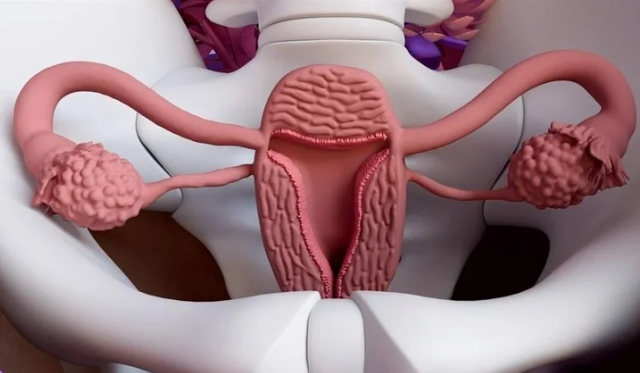
Endometriosis does not pause while you wait. It continues to spread, creating more adhesions, more scarring, more damage to the tubes and ovaries with every cycle that passes untreated.
Fibroids do not stay the same size. They grow. A fibroid that was small and manageable two years ago may now be distorting the uterine cavity and making implantation significantly more difficult.
Adenomyosis continues to embed more deeply into the uterine muscle. The uterine environment becomes progressively less hospitable to a pregnancy with each year of untreated disease.
PCOS, left unaddressed, allows insulin resistance to deepen, hormonal imbalance to worsen, and ovulation to become increasingly irregular.
Every one of these conditions is more manageable in its early stages than in its advanced stages. The woman who addresses endometriosis at 28 has a very different fertility outlook than the woman who finally seeks help at 35 after seven years of painful periods that were normalised and dismissed.
Sperm Quality Also Declines With Age
This applies to men too — and it is equally overlooked.
Male fertility does decline with age, though more gradually than female fertility. Sperm DNA fragmentation — damage to the genetic material within sperm — increases with age and has been directly linked to recurrent miscarriage and failed conception.
A couple who seeks assessment at 30 is in a different position than the same couple at 42. Both partners’ fertility matters. Both partners’ timing matters.
The Emotional Cost Compounds
This is the dimension that is least talked about but perhaps most significant.
Every month of trying and not succeeding carries an emotional weight. Every period that arrives instead of the pregnancy carries grief. Every announcement from a friend or family member carries a quiet ache.
Over months and years, this accumulates. Into depression. Into anxiety. Into strain on relationships. Into an exhaustion so deep that some women lose hope entirely — not because conception was impossible, but because the journey went on so long without support or answers that they simply could not carry it anymore.
Seeking help early does not just protect physical fertility. It protects emotional wellbeing. It replaces uncertainty with information, isolation with support, and passive waiting with active, purposeful steps toward the goal.
The Moment You Act Is The Moment Things Can Change
Here is what we have seen again and again at Ohemaa Fertile Home.
A woman comes to us after three years of trying. She has been waiting. Hoping. Praying. Trying. She is exhausted and discouraged.
We sit with her. We look at her history. We ask the questions nobody has asked before. We request the tests nobody has ordered. And we find something — a hormonal imbalance, a blocked tube, an unaddressed infection history, a uterine condition that has been quietly progressing.
Something that, had she come two years earlier, would have been simpler to address.
We do not say this to create guilt. We say it to create urgency — the kind of urgency that is rooted in love for yourself and your future.
Because the moment you stop waiting and start acting — everything becomes possible that was not possible while you were standing still.
Every Person Starts With the Health They Have Right Now
This is the most important thing to understand.
You cannot go back. You cannot undo the years of waiting or the years of conditions progressing unaddressed. But you can start from exactly where you are today.
The health you have right now — whatever it is — is your starting point. Not your limitation. Your starting point.
And the sooner you start — the sooner you stop waiting, stop dismissing the signs, stop saying “next month” or “next year” — the more your body has to work with.
The woman who acts today has more time than the woman who acts next year. The woman who acts next month has more time than the woman who acts in six months.
The best time to seek help was a year ago. The second best time is today.
What Taking Action Looks Like
It does not have to be overwhelming. It does not have to mean doing everything at once. It means taking one step — the first step — and letting that step lead to the next.
Step 1 — Stop dismissing the signs your body has been sending. Irregular periods. Dark blood. Painful cycles. Weight changes. Fatigue. These are not random. They are information. (See Fertility Red Flags Your Body Is Sending.)
Step 2 — Get a proper assessment. Not just a scan. A full hormonal profile, a tube evaluation, a complete reproductive health picture — for both partners.
Step 3 — Seek guidance from someone who will take your history seriously and help you understand what is actually happening in your body.
Step 4 — Take the first step of your treatment. Whether that is a lifestyle change, a herbal programme, a medical procedure, or a combination — begin. The body can only respond to what you give it.
Step 5 — Reach out to us. At Ohemaa Fertile Home, we have walked with thousands of women who came to us at different stages of their journey — some early, some after years of delay. We meet every woman exactly where she is. We do not judge the waiting. We simply help you stop.
You Have Not Missed Your Window — But Do Not Wait Any Longer
To every woman reading this who has been waiting — for the right time, for more money, for a sign, for courage — this is your sign.
Your body is not your enemy. Time is not your enemy. But delay — unnecessary, fear-driven delay — is working against you every single month.
You deserve answers. You deserve support. You deserve to walk this journey with people who take it as seriously as you do.
Stop waiting. Start today. We are here.
Related Reading
At Ohemaa Fertile Home, we provide guided herbal fertility support rooted in three generations of traditional knowledge. We serve women across Ghana, Nigeria, and the diaspora. Reach out to us on WhatsApp for a free, confidential consultation.